
TPMS Service
Tire-pressure sensor diagnosis, programming and replacement.
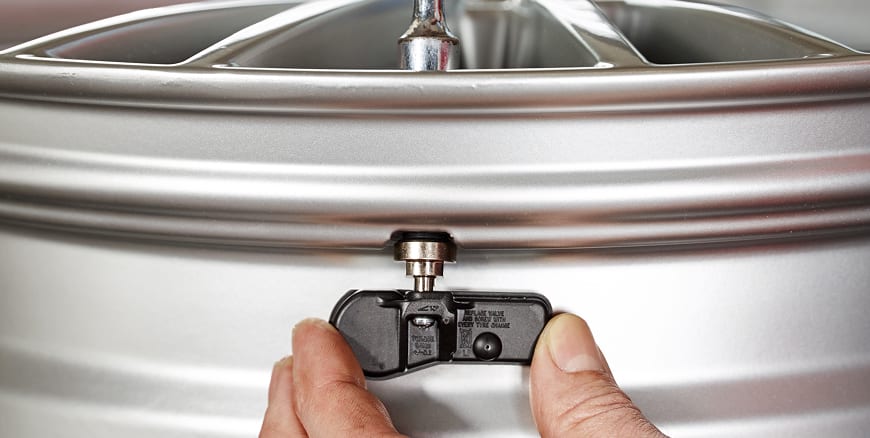
Modern vehicles use tire-pressure monitoring sensors (TPMS) inside each wheel. When one fails, the dashboard light stays on — and a citation in California is real if you ignore it. If your tire pressure light is on and won't go out, Big Tire & Wheels in Sacramento can find out why and fix it, usually while you wait.
A solid light usually means one or more tires is low. A light that flashes for a minute at startup and then stays on usually points to a system fault — a dead sensor battery, a damaged sensor, or a sensor the car no longer recognizes. Cold Sacramento mornings can also drop pressures enough to trigger the warning, so we check and set every tire to the placard pressure as part of the visit. A light that comes on only after a rotation or new tires often just needs a sensor relearn.
We diagnose with a TPMS scan tool, replace failed sensors, and program the new sensor IDs into your vehicle's ECU so the warning clears for good. TPMS sensor replacement here uses OEM-equivalent programmable sensors and a fresh service kit — valve stem, seal and nut — on every install, then we reset the light and confirm with a short drive. If a valve stem is corroded or leaking, the new service kit takes care of that at the same time.
Sensors typically last 5–10 years. If we're already pulling the tire for a new install or repair, replacing a near-end-of-life sensor is the cheapest time to do it, and TPMS service is bundled with new tire installs at a discount. If you're switching to aftermarket wheels or a wheel-and-tire package, we'll transfer or program sensors so the system keeps working.
Some vehicles only need a relearn procedure after a rotation or tire change, not new parts. We'll tell you which it is before replacing anything, and we never just turn the light off — the system is required equipment, so we fix the cause, not hide the symptom.
Drivers from South Sacramento, Florin, Elk Grove and nearby come to our Gerber Road shop Monday through Saturday, and we help in English and Spanish. Call (916) 627-1998 or just pull in.
What's included
- TPMS scan and diagnosis
- OEM-equivalent replacement sensors
- Sensor programming to vehicle ECU
- Relearn procedures after rotation or tire changes
- Service kit (valve stem, seal, nut) on every install
- Tire pressures set to the door-placard spec
- Sensor transfer or programming for new wheels
- Bundled with new tire installs at a discount
- Light-reset and confirmation drive
Our process
- 1Plug in the scan tool and read each sensor
- 2Check and set every tire to the correct pressure
- 3Identify the failed or weak one
- 4Replace the sensor and service kit
- 5Program the ID and confirm with a short drive
Frequently asked
Why is my TPMS light still on after I aired up?+
Either a sensor has failed, or the system needs a relearn procedure. We can diagnose either.
Are TPMS sensors universal?+
Most modern programmable sensors cover hundreds of vehicles, but they need to be programmed correctly. We use OEM-equivalent units.
Can I just turn the light off?+
Not safely. The system is required equipment in California. We fix the cause, not hide the symptom.
Why is my tire pressure light flashing?+
A light that flashes at startup and then stays solid usually means a system fault, like a dead or unrecognized sensor, rather than just low air. A scan tells us which sensor is the problem.
How long do TPMS sensors last?+
Typically 5–10 years. The battery is sealed inside, so when it dies the sensor is replaced.
Can you put TPMS sensors in my new wheels?+
Yes. We can transfer your existing sensors or install and program new ones when you buy aftermarket rims or a wheel-and-tire package.
How long does TPMS sensor replacement take?+
Usually well under an hour for a single sensor, including programming and a confirmation drive. Walk-ins are welcome Monday through Saturday.